

How do daily tasks help develop your child's executive functions?
“How many times do I have to remind you to brush your teeth?!”, “You didn’t put your shoes away again!”, “You have to clean up those toys—I’ve told you ten times already!” — if these phrases are heard in your home every day, you’re not alone. Most parents of children aged 5–8 feel that daily chores are a never-ending battle filled with reminders, negotiations, and frustration on both sides.
I remember Marta, the mother of six-year-old Kuba, who came to see me, completely exhausted. She said, “I don’t understand it. Kuba is a smart child, but he can’t seem to remember to wash his hands before meals. Every day I have to remind him, sometimes a dozen or so times. I wonder if he’ll ever be able to take care of himself.”
These concerns are very common—and I have good news for you. Just because your child “forgets” about their chores doesn’t mean they’re lazy or irresponsible. It means their brain is still learning. And these seemingly small, everyday tasks are one of the most important tools for their development.
Remember: Your desire to understand how to support your child’s development is proof of how much you care about them. Every simple task introduced with love and consistency helps your child develop skills that will last a lifetime.
What are executive functions, and why are they so important?
Executive functions are a set of cognitive processes that allow us to plan, organize ourselves, control our impulses, and achieve our goals. They act as a kind of “manager” in the brain, coordinating our actions.
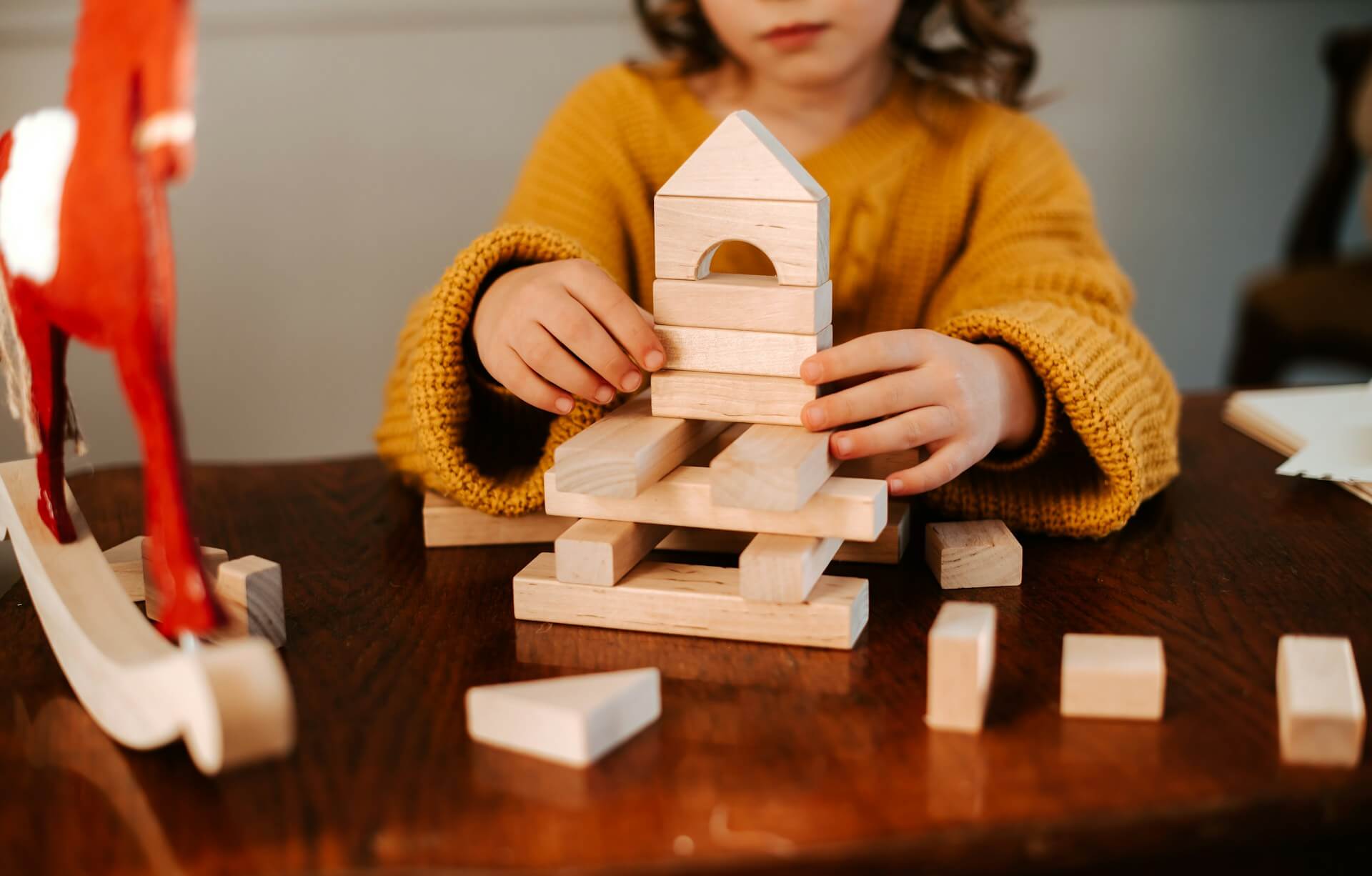
Imagine building a house. You may have the materials and tools, but without an architect and a construction manager, nothing will get built. Executive functions play exactly that role in a child’s brain.
Executive functions in children aged 5–8
- Working memory – keeping information in your head and using it to take action.
- Impulse control – refraining from reacting immediately.
- Cognitive flexibility – adapting to change.
- Planning and organization – thinking about the next steps.
- Task initiation – starting activities without reminders.
- Monitoring activities – identifying errors and correcting them.
These skills develop gradually until early adulthood. The ages of 5 to 8 are a critical period for their development.
Why are small tasks the best way to train executive function?
Daily routines are repetitive, predictable, and clearly structured—exactly what a child’s brain needs to learn. It’s a safe way to practice that eventually leads to automatic responses.
Take a simple activity like brushing your teeth. It’s a single task, yet it helps develop many skills at once:
- working memory (sequence of actions),
- pulsing (the fun will have to wait),
- initiating a task,
- monitoring one's own activities.
When a child performs the same activities every day, the neural connections become stronger and stronger. What initially required many reminders gradually becomes a natural habit.
What daily activities help develop executive functions?
Chores work best when they have a clear start and end, are repeatable, and are age-appropriate.
Examples of chores for children ages 5–8
- Morning routine: getting dressed, brushing my teeth, packing my backpack.
- Evening routine: putting away toys, brushing teeth, getting clothes ready.
- Chores: setting the table, putting away shoes, watering the flowers.
Remember—it’s better to establish one habit and practice it consistently than to try to change everything at once.
How can we assign responsibilities in a way that truly helps a child grow?
Create routines at set times
When a routine takes place at roughly the same time every day, a child’s brain begins to anticipate it. Over time, it ceases to be a command from a parent and becomes a natural part of the day.
Break large tasks down into small steps
Instead of saying, “Clean your room,” it’s better to say, “Put the blocks in the box first, then the stuffed animals on the shelf.” This way, you teach them planning and organization.
Let nature take its course
If a toy is missing because it wasn't put away, let your child look for it. It's a valuable lesson in responsibility.
Use positive reminders
Instead of criticizing, ask questions: “Do you remember what we do before dinner?” This encourages thinking rather than resistance.
Appreciate the effort, not the perfection
Executive functions develop through trial and error. Recognizing one’s efforts boosts motivation and a sense of competence.
Common mistakes parents make
- Doing everything for the child “because it’ll be faster.”
- Too many reminders.
- Expectations that are too high.
- Lack of consistency.
Each of these mistakes hinders learning. Consistency and patience are key.
Building habits is building character
Every time a child completes a small task, they practice perseverance, responsibility, and self-confidence. These are the building blocks of future success—not only in school, but in life as well.
Small, everyday tasks are a quiet way to build skills that will stay with a child for life.
Do you need help building daily habits?
Staying consistent every day takes a lot of energy, especially when you're tired yourself. That's why more and more parents are turning to tools that help them with this process.
FIBO doesn't replace you as a parent—it supports you
FIBO is an interactive plush owl that helps children build daily habits through fun “missions,” reminders, and conversations. You can track their progress in the app and celebrate their small successes together with your child.
- More independence
- Greater responsibility
- Pride in one's own achievements
Because small responsibilities actually lead to big skills.